
 |




| Quantity: | |
|---|---|
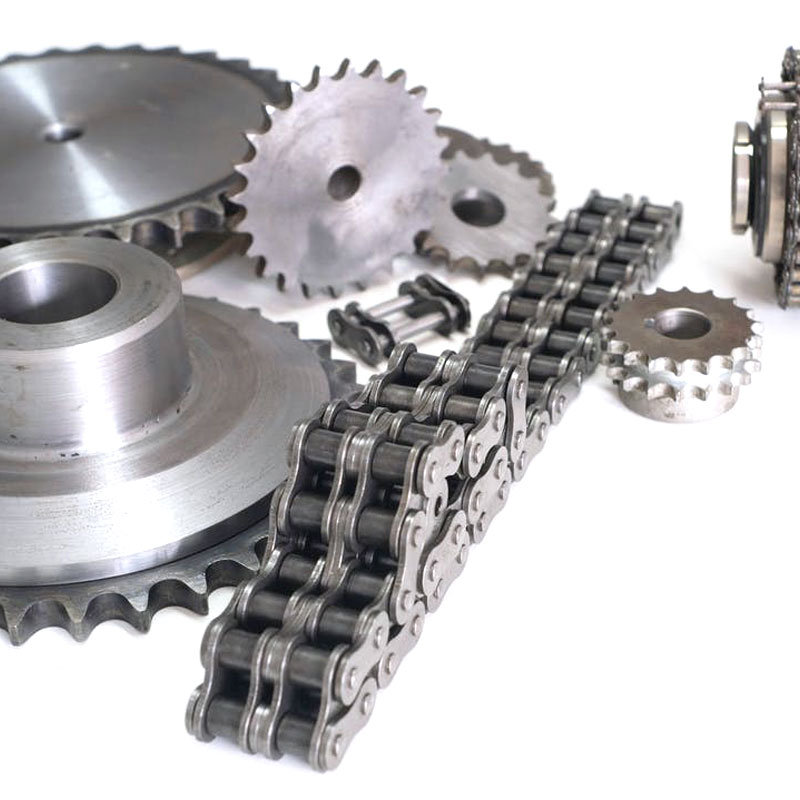
Roller chain sprockets are essential components in power transmission systems, transferring rotational force between chains and machinery shafts. These components mesh with roller chains to deliver consistent motion across various commercial operations, from assembly lines to agricultural equipment. Carbon steel sprockets offer a balanced combination of mechanical properties and cost efficiency, making them suitable for most general industrial applications.
Parameter | Available Options |
Color | Black, Silver, Technicolor |
Base Materials | Carbon Steel, Alloy Steel, Stainless Steel, Aluminum, Plastic |
Number of Teeth | Customized to order |
Bore Diameter | Standard sizes or customized dimensions |
Overall Size | Standard sizes or customized dimensions |
The tooth profile of each sprocket is machined using CNC equipment. This process produces consistent tooth geometry that meshes with standard roller chains. The uniform tooth shape reduces chain friction during operation and minimizes vibration. This machining method ensures compatibility with both high-speed and moderate-load power transmission setups.
We select materials based on the intended operating conditions. Carbon steel sprockets provide adequate tensile strength for most general industrial uses. Alloy steel sprockets offer increased wear resistance for applications involving heavy loads or continuous operation. Stainless steel sprockets resist corrosion, making them appropriate for food processing facilities and marine environments. Aluminum and plastic sprockets are available for lightweight or low-load applications.
We produce sprockets with customizable parameters to fit diverse machinery designs. Customers can specify the number of teeth, pitch diameter, bore size, and hub type. We also manufacture double-strand and triple-strand sprockets for applications requiring higher power transmission capacity. These custom options allow integration into existing mechanical systems without extensive modifications.
Most carbon steel and alloy steel sprockets undergo heat treatment processes. This treatment increases the surface hardness of the sprocket teeth and improves overall toughness. Heat-treated sprockets withstand repeated stress and friction generated during continuous operation, extending their service life. This reduces the frequency of component replacement and associated downtime in commercial operations.
Roller chain sprockets are used across multiple industrial sectors. In manufacturing facilities, they power conveyor systems that transport materials and finished products between workstations. They are also integrated into packaging machinery and automated assembly lines, where consistent motion transfer is required.
In the automotive industry, sprockets are used in engine timing systems to synchronize the rotation of the crankshaft and camshaft. Accurate meshing between the sprocket and timing chain ensures proper engine valve operation. Sprockets are also found in power take-off units that transfer power from the engine to auxiliary equipment.
Agricultural equipment such as tractors, combine harvesters, and irrigation systems rely on sprockets for power transmission. In combine harvesters, sprockets drive components that perform cutting, threshing, and cleaning operations. Their construction allows them to operate in environments with exposure to dirt, dust, and moisture.
Our sprockets are manufactured from carbon steel, alloy steel, stainless steel, aluminum, and plastic. Material selection depends on factors such as load capacity, operating speed, and environmental conditions. Carbon steel is the most commonly used material for general industrial applications.
Yes, we offer fully customizable sprocket dimensions. Customers can specify the number of teeth, bore diameter, pitch diameter, and hub type. We also accommodate special designs such as double-strand and triple-strand sprockets to meet specific power transmission needs.
Heat treatment increases the surface hardness and toughness of carbon steel sprockets. This improves their resistance to wear and fatigue, allowing them to withstand continuous operation under load. Heat-treated sprockets have a longer service life compared to untreated sprockets, reducing maintenance requirements.
To receive a detailed quote for standard or custom carbon steel roller chain sprockets, please submit your specifications through our contact form. Our team will review your requirements and provide a response within 24 hours.
